Expertise · · 2 min read
BOM in electronics development: how to prepare a project estimate request
How the Bill of Materials shapes the cost, timeline and feasibility of electronic devices — and why a well-prepared request is critical to an accurate project estimate.
The foundation of engineering and financial transparency
In professional electronics development there is no such thing as a “rough” estimate. Every engineering, manufacturing or commercial assessment starts with formalized data.
The key document here is the BOM — the Bill of Materials.
What a BOM is
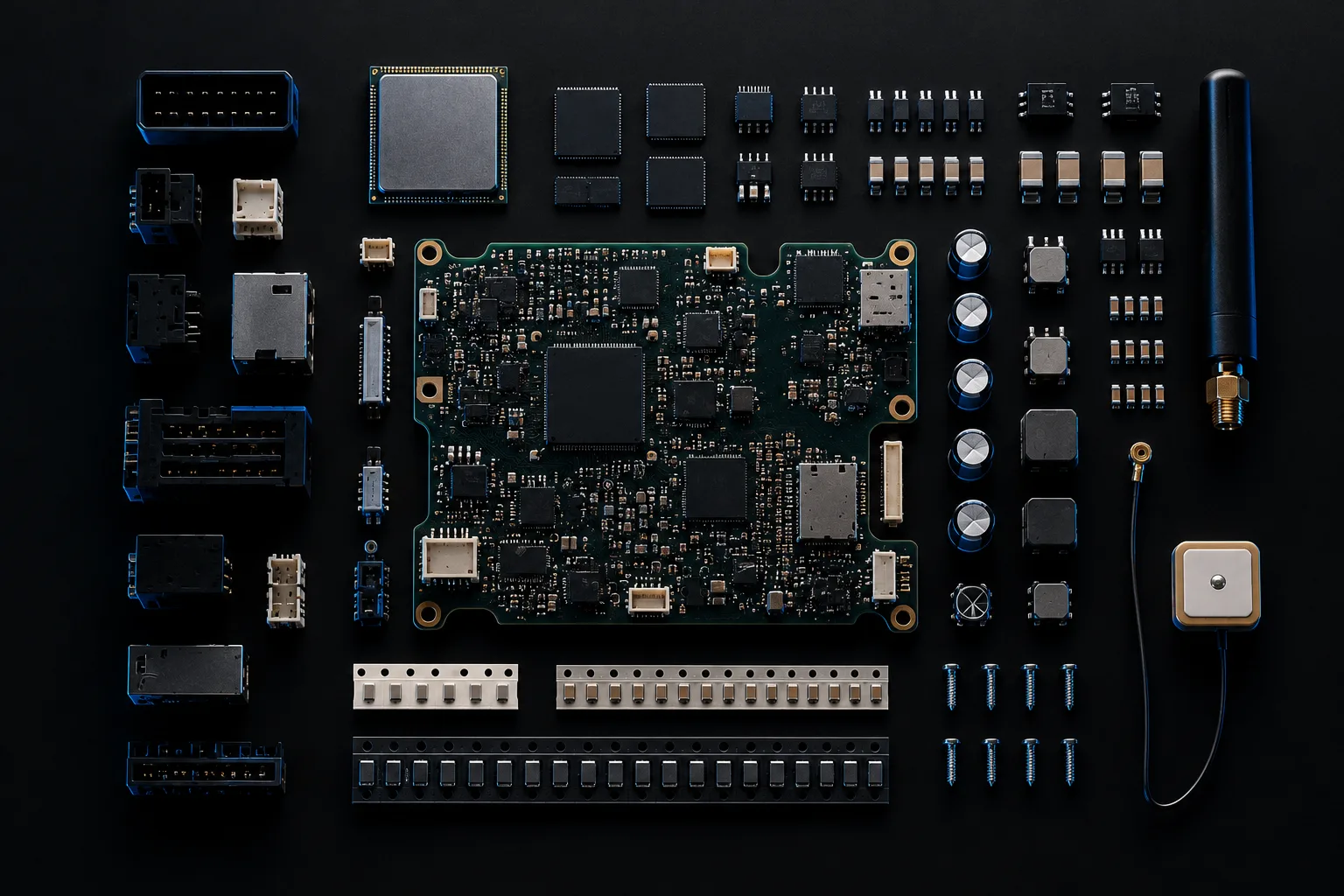
A BOM (Bill of Materials) is a structured list of every component needed to manufacture a device: electronic components, modules, mechanical parts, materials and auxiliary items.
In engineering terms, a BOM is not a shopping list. It is a model of the device that reflects its architecture, cost and technological constraints.
How the BOM shapes a project
Cost
The BOM directly determines the cost of the device, including the effects of volume, component availability and logistics.
Timeline
Component availability, lead times and alternatives define the development and production schedule.
Risk
A BOM reveals supply-chain bottlenecks early and reduces dependence on critical components.
Estimating a development project
Estimating an electronics development project is an analytical process, not a quick calculation. It rests on the full set of requirements, constraints and input data.
The more structured the input, the more accurate the estimate of timeline, budget and technical complexity.
What we need for a preliminary estimate
- A description of the device and its use cases
- Functional requirements and interfaces
- Planned production volumes
- Source materials: a draft BOM, schematics or reference designs
Engineering discipline instead of assumptions
A properly prepared BOM and a structured request turn an idea into a managed process — with a predictable timeline, budget and production outcome.